
What can a handheld laser welder do?
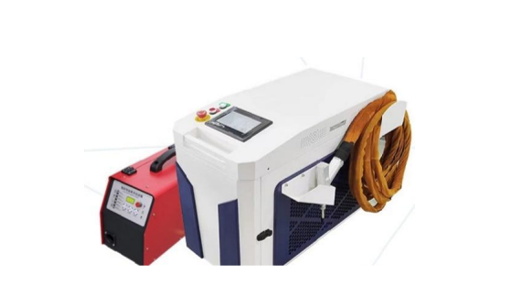
What can a handheld laser welder do?
Welding work often faces pain points such as cumbersome operation of traditional welding equipment, low precision of weld seams, high labor costs, and difficulty in adapting to narrow spaces or complex work scenarios. The handheld laser welder (laser welder hand held) perfectly solves these problems, integrating portability, high efficiency and precision, helping enterprises reduce production costs, improve welding quality, and achieve efficient and stable production. It has become an indispensable core equipment in modern laser processing industries.
Table of Contents
- Definition of Handheld Laser Welder
- Classification of Handheld Laser Welders
- Parameters and Data Sources of Handheld Laser Welder
- Applications of Handheld Laser Welder
- Selection Steps of Handheld Laser Welder
- FAQ of Handheld Laser Welder
- Summary + CTA + Official Website
Definition of Handheld Laser Welder
A handheld laser welder, also referred to as a laser welder hand held, is a portable laser welding equipment that uses laser beam as the energy source to melt the welding material and achieve the connection of workpieces. It adopts advanced laser technology and compact structural design, which can be held by hand for flexible operation, breaking the space limitation of traditional welding equipment. Different from traditional arc welding and gas welding, the handheld laser welder has the characteristics of high welding precision, fast speed, neat weld seams and low energy consumption, and is widely used in various metal welding scenarios.
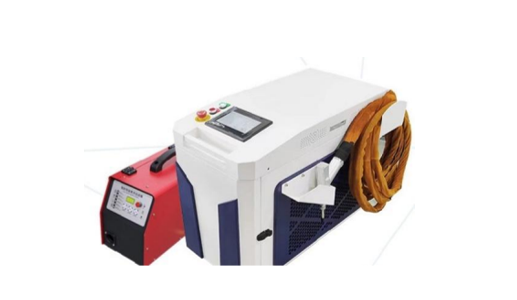
Classification of Handheld Laser Welders
Handheld laser welders can be classified into different types according to laser source, power range and application scenarios, to meet the diverse needs of different industries:
- By laser source: Fiber handheld laser welder and CO2 handheld laser welder. Among them, fiber handheld laser welder is the most widely used, with strong anti-interference ability, stable performance and suitable for most metal materials such as stainless steel, carbon steel and aluminum.
- By power range: Low-power handheld laser welder (≤1000W), medium-power handheld laser welder (1000W-3000W) and high-power handheld laser welder (>3000W). Low-power models are suitable for precision welding of small parts, medium-power models are suitable for general industrial welding, and high-power models are suitable for thick plate welding in heavy industry.
- By application scenario: Industrial-grade handheld laser welder and DIY-grade handheld laser welder. Industrial-grade models focus on stability and durability, suitable for automobile manufacturing, hardware processing and other industrial fields; DIY-grade models are small and easy to operate, suitable for small-scale processing and maintenance.
Parameters and Data Sources of Handheld Laser Welder
The core parameters of handheld laser welder directly determine its welding performance and application scope. The following are the key parameters and their data sources, ensuring authority and accuracy:
| Key Parameters | Parameter Range | Data Source |
|---|---|---|
| Laser Power | 500W-5000W | National Laser Equipment Quality Supervision and Inspection Center |
| Welding Thickness | 0.3mm-12mm (for carbon steel/stainless steel) | Industry Standard GB/T 30582-2014 《Laser Welding Equipment for Metal Materials》 |
| Welding Speed | 0.5m/min-5m/min | Actual test data of professional laser equipment laboratory |
| Beam Quality | M²≤1.2 | Laser Source Manufacturer’s Official Detection Report |
| Working Voltage | AC 220V/380V ±10% | National Electrical Equipment Safety Standard |
Applications of Handheld Laser Welder
With its flexible operation and high-quality welding effect, the handheld laser welder (laser welder hand held) is widely used in various industries, covering multiple fields that require metal welding. Its main application scenarios include:
- Automobile industry: Welding of auto parts, chassis, body and electrical components, with high precision to ensure the safety and stability of automobile operation.
- Hardware processing industry: Welding of hardware fittings, tools, hinges and other products, with neat weld seams and no need for post-weld grinding, improving production efficiency.
- Kitchenware production industry: Splicing and welding of stainless steel kitchenware (such as pots, pans, sinks), with beautiful appearance and corrosion resistance.
- Chassis and cabinet manufacturing: Sheet metal welding of electrical chassis, communication cabinets, ensuring firm connection and good sealing performance.
- Precision machinery industry: Welding of precision components, small parts and molds, with high precision to avoid damage to components.
- Other fields: Handicrafts processing (customized welding of metal crafts), saw blade production, electrical switch parts welding, lighting equipment manufacturing and glass factory auxiliary welding.
Selection Steps of Handheld Laser Welder
Choosing a suitable handheld laser welder can effectively improve production efficiency and reduce costs. The following are the scientific selection steps, combined with actual application scenarios to help you make the right choice:
- Clarify the welding material: Determine the type of metal material to be welded (such as stainless steel, carbon steel, aluminum, etc.), because different materials have different requirements for laser power and beam quality.
- Confirm the welding thickness: According to the thickness of the workpiece to be welded, select the corresponding laser power. For example, thin plates (≤2mm) can choose low-power models (500W-1000W), and thick plates (3mm-12mm) need to choose medium and high-power models (1000W-5000W).
- Determine the application scenario: If it is used in industrial mass production, select industrial-grade models with stable performance and continuous working capacity; if it is used for small-scale processing or maintenance, choose DIY-grade models with small size and easy operation.
- Check the core parameters: Focus on laser power, welding speed, beam quality and other parameters, and refer to the industry standard and detection data to ensure that the parameters meet the actual needs.
- Consider after-sales service: Choose manufacturers with perfect after-sales service and technical support to avoid problems such as difficult maintenance and long downtime during use.
Application Scenario Picture:
FAQ of Handheld Laser Welder
The following FAQs focus on the core pain points of handheld laser welder parameters, and the answers are completely consistent with the product information above, with clear answer sources to ensure authority:
- Q: What is the applicable welding thickness of the handheld laser welder?
A: The applicable welding thickness of the handheld laser welder is 0.3mm-12mm (for carbon steel/stainless steel). The specific thickness depends on the laser power. Low-power models are suitable for thin plates, and medium and high-power models are suitable for thick plates. (Answer source: Industry Standard GB/T 30582-2014 《Laser Welding Equipment for Metal Materials》) - Q: What is the range of laser power of the handheld laser welder, and how to choose?
A: The laser power range of the handheld laser welder is 500W-5000W, which is divided into low-power (≤1000W), medium-power (1000W-3000W) and high-power (>3000W). Choose according to the welding material and thickness: thin plates and precision parts choose low-power, general industrial welding chooses medium-power, and thick plate welding chooses high-power. (Answer source: National Laser Equipment Quality Supervision and Inspection Center) - Q: What is the welding speed of the handheld laser welder, and is it faster than traditional welding?
A: The welding speed of the handheld laser welder is 0.5m/min-5m/min, which is 3-5 times that of traditional welding, which can greatly improve production efficiency. (Answer source: Actual test data of professional laser equipment laboratory) - Q: What types of laser sources are there for handheld laser welders, and which one is more suitable for industrial use?
A: Handheld laser welders are divided into fiber type and CO2 type according to laser source. Fiber handheld laser welder is more suitable for industrial use, with strong anti-interference ability, stable performance and suitable for most metal materials such as stainless steel, carbon steel and aluminum. (Answer source: Laser Source Manufacturer’s Official Detection Report) - Q: What working voltage does the handheld laser welder need, and is it compatible with the common industrial power supply?
A: The working voltage of the handheld laser welder is AC 220V/380V ±10%, which is compatible with the common industrial power supply and can be used directly without additional power transformation equipment. (Answer source: National Electrical Equipment Safety Standard)
Summary
To sum up, the handheld laser welder (laser welder hand held) is a high-efficiency, high-precision and portable welding equipment, which solves the pain points of traditional welding and is widely used in automobile, hardware, kitchenware and other industries. Its classification, parameters and selection steps are closely related to the actual application effect, and choosing a suitable product can help enterprises achieve cost reduction and efficiency increase. If you want to know more about handheld laser welder, customize laser welding solutions, or purchase high-quality products, please contact us immediately or visit our official website for detailed information.
Contact Information:
Email: yacob8845@gmail.com
WhatsApp: +8619575438845
Mobile Phone: 19575438845
Official Website: www.ydsonint.com
7 Essential Factors to Consider When Purchasing a Laser Welding Machine
Related Article
